Automotive Login Register Form UI Kit: Avoiding Common Pitfalls for Better Design Results
Understanding the Automotive Login Register Form UI Kit
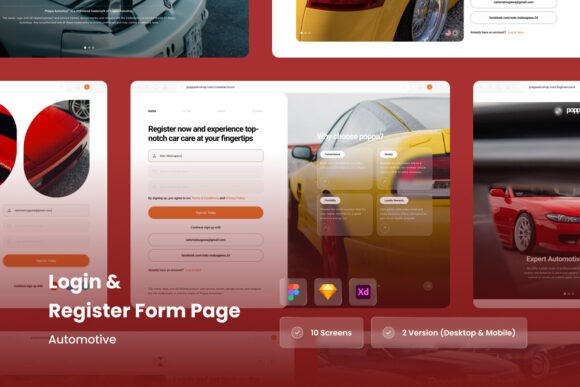
The Automotive Login Register Form UI Kit is a specialized design resource tailored for professionals in the automotive industry. Whether you're building a car dealership website, an automotive marketplace, or a rental service app, this UI kit offers pre-designed screens and components that streamline the development of user interfaces. With two versions — desktop (1440px) and mobile (430px) — it ensures your project maintains a consistent, modern look across devices.
Featuring 10 carefully crafted screens, organized layers, and auto-layout functionality, the kit is compatible with Figma, Sketch, and Adobe XD. Its open-source fonts and global text and color styles make it easy to customize and scale according to your brand's needs.
Common Mistakes When Choosing and Using the UI Kit
While the Automotive Login Register Form UI Kit offers a powerful foundation for your project, there are several common missteps that designers and developers often make when selecting or implementing it. Being aware of these issues can help you avoid costly delays and design inconsistencies.
1. Assuming the UI Kit Fits All Automotive Niches
One of the most overlooked details is the assumption that this UI kit works for every automotive-related platform. While it's ideal for car dealerships, rental services, and marketplaces, it may not be optimized for more specialized applications like automotive repair tracking or vehicle diagnostics platforms.
Better approach: Before downloading or purchasing, evaluate whether the design language and form structures align with your specific use case. If your project requires highly technical or niche interfaces, consider supplementing the kit with custom elements.
2. Ignoring Device-Specific Design Nuances
Although the UI kit includes both desktop and mobile versions, some users fail to test how the forms behave on actual devices. For example, a login form that looks clean on desktop might become cramped or difficult to navigate on mobile without proper spacing and touch targets.
Better approach: Always test mobile forms on real devices or high-fidelity prototypes. Adjust padding, font sizes, and button dimensions to ensure usability and accessibility, especially for users with larger fingers or those using the app on the go.
3. Overlooking Customization Requirements
The UI kit is designed to be easy to adjust, but many users underestimate how much customization may be needed to match their brand identity. Simply changing colors without adjusting contrast or typography can result in a disjointed or unprofessional appearance.
Better approach: Use the global text and color styles to maintain consistency while customizing. If your brand uses specific fonts not included in the kit, make sure to replace them early and test readability across all screen sizes.
4. Assuming Images Are Included
One of the most common misunderstandings is that the preview images seen in promotional materials are included in the download. In reality, all images are for preview purposes only and must be sourced separately.
Better approach: Plan ahead for image sourcing or create your own visuals that align with the UI kit's aesthetic. Using placeholder images for too long can delay your project timeline and impact the overall user experience during testing phases.
How These Mistakes Affect Real-World Projects
Making these mistakes can have tangible consequences:
- Reduced usability: Poorly adapted mobile forms lead to user frustration and higher abandonment rates.
- Inconsistent branding: Rushed customization efforts can create a disjointed look that confuses users and weakens brand recognition.
- Delays in development: Discovering missing assets or niche compatibility issues late in the process forces time-consuming revisions.
- Increased costs: Fixing avoidable issues after launch often costs more than addressing them during the planning or design phase.
Practical Tips for Getting the Most from the UI Kit
Here are some actionable steps to help you make informed decisions and get the most out of the Automotive Login Register Form UI Kit:
- Review the included files carefully: Make sure the kit includes the file formats you need — Figma (.fig), Sketch (.sketch), or Adobe XD (.xd). This ensures compatibility with your preferred design tools.
- Check layer organization: Well-structured layers and auto-layout features save time when making edits. If layers are messy or disorganized, it may be worth reaching out to the creator or considering an alternative kit.
- Test form interactions: Use prototyping tools to simulate user flows. This helps uncover usability issues early, such as unclear error messages or confusing navigation between registration steps.
- Verify licensing for fonts and icons: While the kit uses open-source fonts, always double-check the license to ensure it's acceptable for commercial use. Also, confirm whether any included icons or illustrations are free to use or require attribution.
- Consider accessibility standards: Ensure that form labels, input fields, and buttons meet WCAG contrast and sizing guidelines. This makes your interface more inclusive and legally compliant in many regions.
Final Thoughts: Making Informed Design Decisions
The Automotive Login Register Form UI Kit is a valuable tool for anyone looking to create a sleek, modern interface in the automotive space. However, like any design resource, its effectiveness depends on how thoughtfully it's applied.
By understanding its limitations, planning for customization needs, and testing thoroughly across devices, you can avoid common pitfalls and ensure your final product is both functional and visually appealing. Always take the time to review what’s included, assess your specific project requirements, and consider how the kit will integrate with your broader design system.
Ultimately, the goal is to use the UI kit as a foundation — not a one-size-fits-all solution — allowing you to build a tailored experience that resonates with your target audience and supports your business objectives.